So, let’s start with what Botox is: the brand name for Onabotulinumtoxin A, a neurotoxin derived from Clostridium botulinum. There are altogether four different agents now approved by the FDA for the cosmetic facial wrinkles: Botox, Xeomin, Dysport, and Jeuveau. They all inhibit signaling from the nerve to the target muscle, thus preventing contraction. When these muscles contract, action occurs in the skin that pulls the tissue, causing the crease to form. All these products have more or less the same effects, but the onset, duration of action, and discomfort at the time of injection vary slightly. Some patients ask how long Botox lasts.
All these products are good in the right hands, but sometimes the decision of when to use what is a clinical judgment based on several variables. At times, the case could be an elective preference of the surgeon or of the injector. At other times, it may be dictated by the experience of a patient who has tried several of these products and found that they personally achieve better efficacy with one particular product over others.
In a Hurry? Dial 312-374-3352 now!
What Are the Cosmetic Indications of Botox?
Botox cosmetic injections are used to correct aging features. It is used to smooth fine and superficial lines and wrinkles in various areas on your face, including the:
- Eyebrows
- Forehead
- Nose
- Eyes (crow’s feet)
- Lips
- Chin
- Jawline
- Neck
What To Expect for Your Procedure?
Finally, the big answer. Oftentimes, at the time of your injection, your injector will talk about your goals and determine, after screening you, if those goals can be achieved using neurotoxin; if that’s the case, then consider yourself lucky!
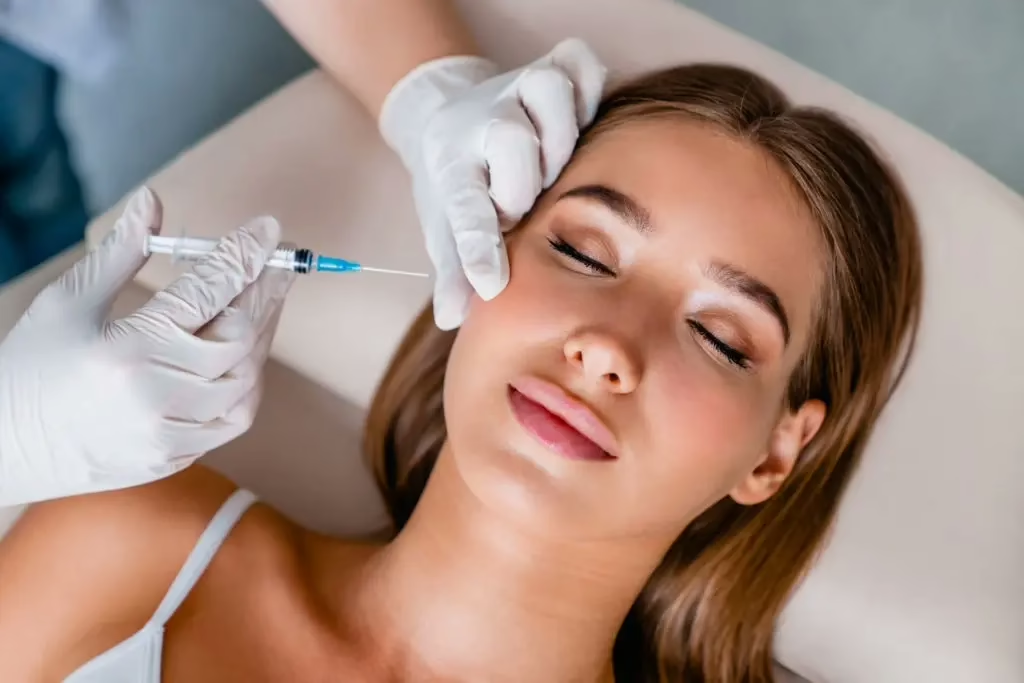
Your cleansed face may have those areas to be injected marked with some removable eyeliner/marker by your injector. Then, by injecting using possible applications of numbing cream or using ice packs, for your comfort, before injection, it will also be seated during injection over several sites intended for your desired muscle
Actually, there may be some tiny bumps manifested on your skin at the actual injection site; however, these will have resolved by the time you leave. There may be some mild bruising that usually only takes 24-48 hours to resolve. Finally, you will be given instructions on what to do and not to do over the next 24 hours-this varies from injector to injector.
The Onset
Neurotoxin usually starts working in the first 3-5 days, and in some cases, one has to wait 7-10 days to see the full and final results. Personally, my advice to the patients is to wait for a complete 2 weeks from the date of the Botox injection. If they then consider a touch-up necessary, I will take care of it. The reason behind such a delay is that the toxin takes time to block nerve impulses to the muscles, and this cannot really occur instantaneously.
Duration
Who would not want that Botox last forever? Well, it does not! Over time, the neurotoxin’s action fades, and the nerves can once again send those signals to cause contraction-the muscles begin to work again! The duration for Botox last usually up to 3-4 months.
Such periods can fully vary among patients; some have a longer-lasting effect, say, 4 months, 6 months, or 2 months at least. Besides, first-time users probably see less persistence with Botox at first, but the effects go longer after the second treatment. Every individual is unique, so response rates will differ.
In a Hurry? Dial 312-374-3352 now!
Does Botox Help With Pain Relief?
Many practitioners now have an anti-Botox cause for its use in the treatment of pain. Botox interrupts the nerve signals aimed toward muscle activity so that the muscle is relaxed, and no more signals would cause pain. Therefore, this toxin injection becomes helpful to treat:
- Back pain
- Neck pain
- Jaw pain
- Nerve pain
- Pain due to sciatica
- Neuropathy/peripheral neuropathy
- Pelvic pain
- Chronic myofascial pain (CMP)
- Arthritis
- Joints
- TMJ
What Is Botox Really Made Of?
Botulinum neurotoxins used in Botox come from the bacterium Clostridium botulinum. Medical injections make use of a specific type of this bacterium (type A). Naturally occurring botulinum toxins may be found in soils and during contamination of foods. Large enough amounts, or injected into a wound, of botulinum toxins taken through food may hit someone with botulism. This disorder is a serious neuromuscular disorder that interferes with breathing. For safety and efficacy, Botox preparations are done under laboratory conditions. There, technicians dilute and sterilize the botulinum toxins until they cannot be able to bring about botulism.
Is Botox Safe?
Botox is generally safe when practiced by a licensed health care provider. So, consult with your health care practitioner if the Botox injection is appropriate for you.
What Are the Adverse Effects of Botox?
Side effects specifically related to Botulinum toxin injections varied according to the treated area. Most were not too severe and generally self-limited over a day or two. The side effects that Botox could lead to were:
- Pain, swelling at the injection sites, redness, or bruising
- General malaise (having flu-like symptoms)
- Headaches
- Neckache
- Stomach upset (indigestion)
- Transient eyelid droop (ptosis)
- Irritation or redness of the eyes

In a Hurry? Dial 312-374-3352 now!
Frequently Asked Questions About Botox
How Effective Is Botox Treatment in Curing Migraine?
Botox injections are considered an effective treatment regimen for chronic migraines by the United States Food and Drug Administration (FDA). This is better for someone who has at least 15 days a month when he has a headache.
The toxin is injected into the areas from which symptoms of the migraine arise. Its penetration into the nerve endings begins to block out the chemicals responsible for special pain transmission. There are no major complications involved in using Botox for migraine. One will find that improvements usually occur with further treatment, with most patients reporting satisfaction at two or three sessions.
Does Botox Hurt?
The needles are so thin that almost everybody gets little to no pain when using Botox. Patients often describe a pinch or sting sensation. If pain is a concern, your provider can offer you a topical numbing gel.
Can You Get Botox During Pregnancy?
Botox will probably not harm your baby, but most healthcare providers generally advise patients to delay Botox applications until after delivery.
Am I Allowed To Get Botox While Breastfeeding?
Experts are not so sure whether or not Botox penetrates breast milk. Thus, most healthcare providers recommend refraining from Botox while breastfeeding, just to be on the safe side with the infant.
Final Thought
Botox, a cosmetic injection derived from a purified neurotoxin – onabotulinumtoxin A, is intended to relax specific facial muscles and thereby smoothen wrinkles. It is used on the forehead, brows, eyes, lips, chin, jawline, and neck. Most people perceive the results of the procedures given to them within about three to five days, peaking at about two weeks. Processes typically last at least three to four months, with some lasting a little longer or shorter, depending on individual bodily states and prior treatments. Botox can also alleviate certain nociceptive pains: migraines, TMJ, nerve pain, and muscle discomfort. Given by a trained person, Botox is said to be safe with an average temporary side-effect of redness or mild bruising.
Are you ready to smooth out your wrinkles and freshen your look? Our Dvida Med Spa in Raleigh, North Carolina, has safe, approved, and professionally applied Botox service, keeping your goals in mind. Schedule your consultation today and enjoy results that will look naturally beautiful on you.