Do you know how hormone replacement therapy works? A hormone replacement therapy, HRT for short, is basically an administration of hormones, mainly estrogen, that ameliorates menopausal symptoms, such as hot flashes and vaginal dryness. It may also prevent bone strength loss (osteoporosis) and reduce the risks of colon and endometrial cancers. For intact uteri, a Progestin addition prevents the risk of uterine cancer.
In a Hurry? Dial 312-374-3352 now!
The Types of Hormone Replacement Therapy (HRT)
The many types of hormone replacement therapy (HRT) for various hormones, including oestrogens, progestagens, and, on occasion, testosterone, may often be personalized by an expert physician. It may also be administered or used in other modes of delivery: tablets, patches, gel, spray, vaginal rings, pessaries, or cream. They may also be taken or applied at different times: as cyclical (if sequential) or continuous.
The best type of HRT depends on many factors, such as whether or not you have had a hysterectomy, the point of menopause you are experiencing, and personal preference. When considering HRT, you should first visit a GP regarding the possible options for you.
What are HRT Hormones and What Does Hormone Replacement Therapy Do for You?
HRT would substitute the hormones from your body’s systems, which would have been less as you passed through menopause. This point where the sucker stops sucking is known as menopause and simply means cessation of periods with lower levels of hormones. This occurs mainly among women aged 45-55; sometimes, it is even earlier. The number of times affected may vary from one to three periods.
These hormones are predominantly oestrogen and progestogen: required for anything from the period cycle to ovulation and pregnancy, to bone health for managing menopause symptoms. Understanding what hormone replacement therapy does can help you see how these hormones work to restore balance in your body. Testosterone is currently not licensed to treat menopause symptoms, but can be prescribed by a specialist doctor.
How to Take HRT?
Different modes of HRT may be prescribed. Each has its own merits and demerits, but you may have to try multiple brands or methods of HRT use before finding the best one for you. First, discuss it with your GP.
Normally, it has been taken for 2 years up to 5 years, though some women continue taking it for much longer. Some other things to know about when to take HRT include the following.
Tablets
Tablets are considered one of the most popular methods of HRT. You take them daily, and both oestrogen-only and combined HRT are available as tablets.
The advantage is that it may be the easiest way to take treatment for the day. And the disadvantage is that most HRT risks, such as blood clots, are much greater with the use of tablets than patches, gel, or spray (though the risk overall is still quite small). Learn all about the advantages and disadvantages of HRT in their respective sections.

In a Hurry? Dial 312-374-3352 now!
Patch
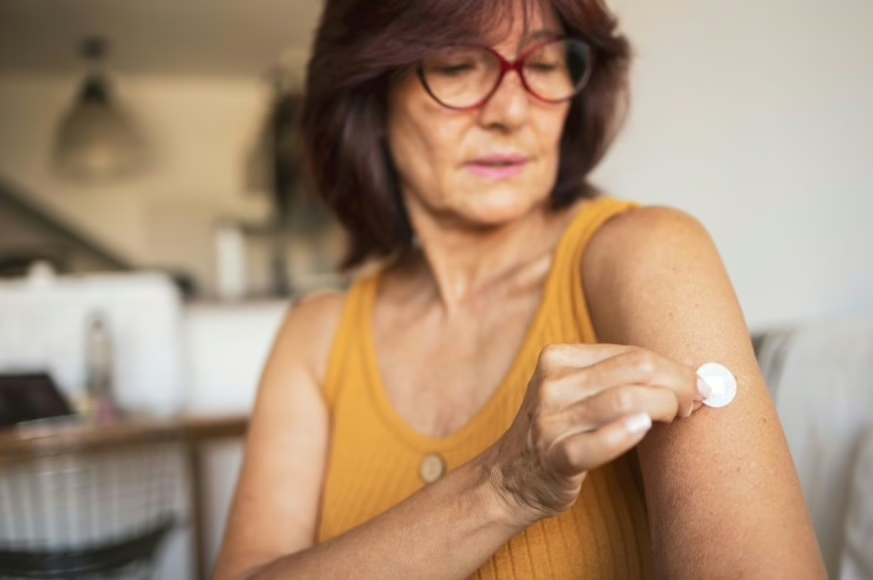
Skin patches are, even yet, very popular HRT methods. They attach themselves somewhere on the lower half of your body, causing the gradual release of small amounts of hormones into your body. Usually, you have to change the patch every few days, but this varies with the brand.
Oestrogen alone and combined HRT can be obtained as skin patches.
The advantage is that patches may be a better option than tablets if you have difficulty swallowing tablets or generally are going to forget to take them. One of the advantages of using patches instead of pills is that some common HRT side effects, such as indigestion, can be avoided, and unlike tablets, they do not increase your risk of blood clots. This method also helps demonstrate what hormone replacement therapy does in maintaining hormonal balance while minimizing potential risks.
While the disadvantage is that you may find skin patches do not stick very well at times, specifically if you moisturize your skin. They also might cause redness or irritation, or leave a mark on the skin. To help with issues of skin adhesion, apply the patch to dry, non-moisturized skin or slowly peel it off to avoid marks.
Oestrogen Gel
In the application on your skin daily, you get oestrogen gel, which is the commonest common form of HRT. Then, the body slowly absorbs the oestrogen. If a woman has not had a hysterectomy, this means she will need to use progestogen in conjunction with the gel.
The benefits are like skin patches; gel can be a good way of taking HRT if you can’t take tablets or want to avoid blood clots. The disadvantages are that it can take quite some time because the gel can take 5 minutes or more to dry.
Spray
Oestrogen-only HRT is also available as a once-a-day means of use spray. Students put 1 to 3 sprays under their arms or onto their inner thighs. This spray must be combined with a progestogen if you haven’t had a hysterectomy.
- Advantages: This is a good way of taking HRT if you can’t take tablets. Using the spray does not increase your risk of blood clots.
- Disadvantages: You dress within 2 minutes of using this spray, but you must wait for a complete hour before taking a bath or using a shower.
Testosterone
The menopause will also cause a reduction in a woman’s body androgens, such as testosterone, although it happens later. This can make you feel tired and cause some low libido or sex drive issues, along with mood effects. It also affects bone health. The use of testosterone is presently not prescribed for the treatment of menopause symptoms; however, it could be given by a specialist doctor depending on what hormone replacement therapy do to help restore hormonal balance. The only condition that applies is:
- After menopause
- Failing conditions of insufficient sex drive
- HRT alone has failed against them
The current studies do not provide enough evidence on whether testosterone might help with other menopausal symptoms. Testosterone is available as a gel. Effects of using testosterone might also include: acne, hairiness, and weight gain, yet seldom.
Like this, others may suffer from adverse effects with testosterone gel upon exposure. Thus, wash your hands and cover the area with clothing after using it. If you think testosterone might be beneficial to you, then you can consult a GP.
Different Treatment Routines of HRT
The type and regimen of HRT will depend on whether you are a hysterectomy patient or on how old you are, if you are early in the stages of menopause, whether you still have periods (perimenopause), or whether you have not had a period for over one year (post-menopause).
For example, if a case has undergone a hysterectomy, then that particular case is required to be placed on estrogen-only HR therapy on a daily regimen. The next sort of HRT regimen will be dictated by whether the subject is perimenopause or not having a period for 1 year or more (post-menopause) when in need of taking both estrogen and progestogen.
Bottom Line!
It is your responsibility to claim your hormonal well-being and reclaim yourself as Dvida Med Spa works in Cary. Learn what hormone replacement therapy does to restore balance and alleviate menopause symptoms while improving your overall well-being—especially when it comes to hot flashes, low energy, or low libido.
Each treatment sculpted by our specialists is customized for the specifications of your body. Hormones should not control your life anymore; make an appointment with Dvida Med Spa in Cary today to kick-start your renewed energy, confidence, and vitality.

Frequently Asked Questions About HRT
How Long Will I Take Hrt?
In general, though, most are on the HRT program for about five years or less. Presently, there are no set limits that may vary, according to the severity of symptoms, the type of HRT you are taking, and individual preferences. Your doctor will keep an eye on you and modify your plan as necessary. If you develop a medical condition that would preclude HRT use, though, you should consult your doctor to determine whether you can safely continue taking HRT with certain modifications or what hormone replacement therapy do to best suit your health needs.
Does HRT Increase the Risk of Breast Cancer?
Cancer risk may increase with combined hormonal therapy, but, according to most studies, the risk may be very low (less than 1 in 1,000). Breast cancer risk usually does not increase after about five years of usage. The risk of breast cancer depends on various other factors that are not HRT-use related.
It is advisable to take your provider into confidence regarding the risk factors, which are very personal to you. They are the best category of person to make you understand your specific risk with regard to other conditions, including cancer.
Does HRT Increase My Heart Disease Risk?
Scientists are still learning how hormones may influence the heart and blood vessels. Most studies show that starting hormone therapy just before or soon after menopause, or in the early 50s, lowers the risk of heart disease compared to starting after age 60.
Because complications from early estrogen loss can worsen, most patients under 40 face a higher risk of cardiovascular disease without HRT.